
We Need Light!
Change the narrative
“Change the narrative” is the title on the International Association for Suicide Prevention’s website page for World Suicide Prevention Day. Each year, they ask people to light a candle in their window at 8 p.m. on September 10th, and they offer “Light a Candle” banners in more than 50 languages for people to spread the word.
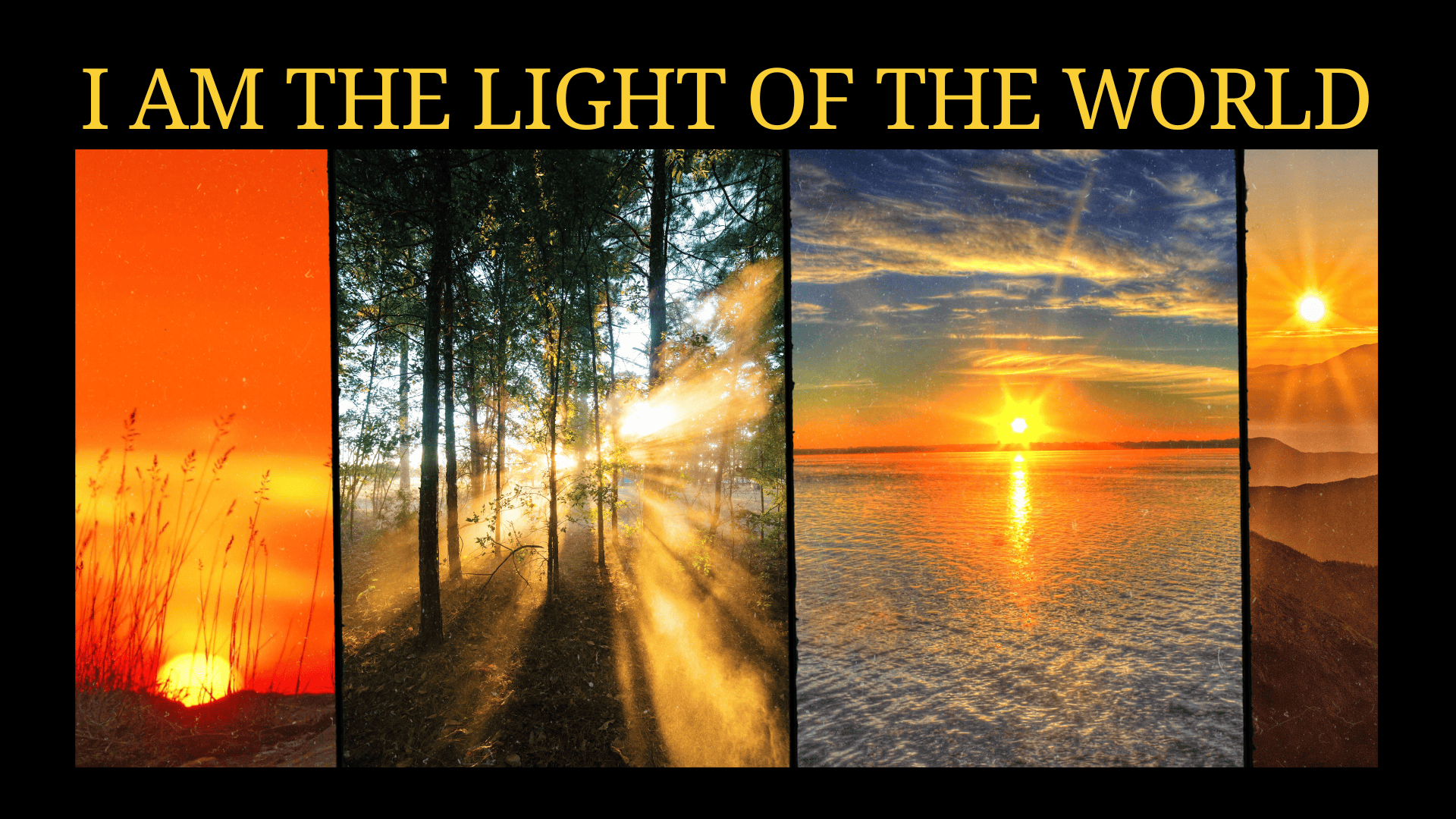
I think changing the narrative—even one candle at a time—is what Jesus had in mind when he said, “I am the light of the world” (John 8:12). The concept of light was so important to John the Apostle that the term “light” appears more than twenty times in his Gospel.
Even though I’ve written about Light in previous blog posts (“If Ever We Needed Light”; “Light, Light, and More Light”), if John could talk about light more than twenty times, surely there’s more that can be said.
Surely, we need the warmth and clarity light brings.
Surely, we can share whatever light we have with others.
Surely, we want to change the narrative.
The warmth of light
The other morning, I was driving along the Fox River near my house, and even though it was bitter cold outside, I realized the bright sun shining through my car window was quickly warming things up inside. The sensation of warmth sparked a 25-year-old memory of my row house in Philly. I don’t remember how or why it became so important to me, but at some point I began to imagine having a fireplace in that house. A real, wood-burning fireplace! Now you have to picture a Philly rowhouse. It’s not very wide (about 16 feet), and the question of where I would put such a fireplace loomed large. To say nothing of how that might even work.
But my longing for this chamber of warmth was strong, and I pursued the dream. I hired an architect to assess the load-bearing walls in my house and to help me figure out where a fireplace might be possible. He inspired me with the idea of tearing down the wall separating the living room and dining room so I could install a two-sided fireplace at an angle that could be seen from both rooms.
I’ll skip the construction details, but I want to share the outcome: Creating a fireplace where it didn’t seem possible was one of the best things I did in that house! I planned the surrounding bookshelves and side wood bin, and carefully chose the Japanese raku-fired tiles. Once I got past all the obstacles and decisions, and the fireplace was completed, I loved the ritual of bringing in the wood and setting it up. I loved watching the dance of flames that created movements of light throughout my entire space, playful leaps and sparks that were always changing. But I especially loved the warmth of those blazing, glowing logs.
Physical warmth not only feels good, but it is key to sustaining life. We humans cannot survive without the warmth of light. But we also cannot survive without emotional warmth. That kind of light is of a totally different nature, but gives us life just the same. I think of Jesus’s words earlier in John, where he paired “light” with “life”: “Whoever follows me will not walk in darkness but will have the light of life” (John 8:12).
This past Christmas, a friend of mine chose to give only gifts that related to light. She gave me a small lantern with fairy lights inside that I could enjoy every night. Not only did those tiny lights soften my room, but each time I turned them on, I was reminded of the treasure of our friendship.
My friend’s gift of light was full of emotional warmth, offering much-needed comfort and reassurance.
We need the warmth of light.
The clarity of light
Have you ever gotten so engaged in reading a book that you didn’t realize how dark the room around you was getting? The solution: Turn on the light so you can see clearly.
Or maybe you’ve tried to thread a needle and couldn’t get the thread through the tiny hole, so you moved to a place with better light to help you see what you were doing.
Light helps us see things differently.
Recently I read about a project in Italy that makes art accessible for people who are blind. People with limited vision need to experience art through other senses, especially touch. The problem is, most museum sculptures are untouchable. Two blind people came up with a solution. They created a tactile museum, the Museo Omero, full of life-size replicas of some of Italy’s most famous artworks, and set them up to be touched. They describe this sensory way of appreciating art as a different way of “seeing.”
We can never predict what will happen when we see things in a different light.
I remember very well the first Sunday I visited Ted Loder’s church in Philadelphia. It was there that I heard, for the first time, a congregation saying The Lord’s Prayer as “Our Mother/Father who art in heaven.” All my life, God had been a “He,” never a “She.” Ironically, as an independent, working woman in my mid-thirties, I had considered myself a part of the feminist movement. Yet the amazing, creative energy of women hadn’t yet sunk into my understanding of God.
Daring to think of God as “She,” as a Mother figure, was like turning on a bright light in a dim room. I could see more clearly what I had missed before! I began to notice that signs of the feminine aspects of God were all over the place in scripture! References to God gathering Her people like a mother hen gathers her chicks (Matt 23:37); to God who gave us birth (Dt. 32:18); to God as a woman in labor bringing forth a new creation (Is 42:14); to the feminine persona of Wisdom (Sophia) in the book of Proverbs.
Little did I know at the time that I would go on to edit a book titled God the What?: What Our Metaphors for God Reveal about Our Beliefs in God, by Carolyn Bohler. Her work inspired me to stretch my thinking even further, to explore metaphors such as “God the Nursing Mother,” “God the Jazz Band Leader,” “God the Divine Physical Therapist,” and other eye-opening images. The idea of God as a warm mother figure calling me to her care was a profound shift for me.
In these tumultuous, chaotic days, I think we need, more than ever, the light of these feminine images. Not to replace masculine images but to see things differently. We need the light of clarity to expand our images so we can know—really know—a fuller, more tender, more loving aspect of God.
We need the clarity of light.
Reflections of light
One aspect of light that we don’t think about very much is its capacity to create reflections. When light hits a surface, the light bounces off and changes direction. Actually, we see most objects because they reflect light from a source, such as the sun.
In a similar way, we can reflect the Light of Jesus. It can change our direction, and maybe the direction of those we share it with.
Sometimes it’s just a small reflection of Light, such as offering to help to someone. Last year, on the day my medical crises came to a head, a neighbor happened to be walking her dog, and she stopped in my driveway as I was pulling out. I told her I was headed to a doctor’s appointment to see if they could figure out what was going on for me, and she said, “Let me know if I can help.”
Sometimes a small reflection of Light turns into a flood light! That same day, after an unexpected ambulance ride from the doctor’s office to the hospital, I called my neighbor, and she stepped in big time, reflecting Light day after day. It was a month before I was able to get back home, and during those long days, she cared for my cat, brought in mail, kept an eye on my house, and connected with my family when they came to visit. Her reflection of Light shifted those scary days from being alone to being together.
I’m reminded of Jesus’s statement in Matthew: “You are the light of the world … let your light shine before others” (Matthew 5:14, 16).
We need to be reflections of light.
Beacons of light
If you’re a fan of the PBS series “All Creatures Great and Small,” you might have caught this scene in the first episode of Season 6. The people in the small village of Darrowby have just heard that the war is over, and they are jubilantly celebrating in the streets, with hugs and tears and laughter. Later in the day, they followed a centuries-old UK tradition of lighting beacons to share a message of celebration. They headed up to the top of a hill and built a huge bonfire that could be seen for miles. What touched me deeply was the moment when they looked out across the neighboring hills and saw one beacon after another being lit up against the night sky. People were connecting with each other across the distance through these beacons of light.
The City of Minneapolis had a beacon of its own last week. The St. Jane House, Old Highland Neighborhood Association, the Luminary Loppet, and Wintercraft teamed up to host the Northside Luminary Light Up! For two nights, they held a 40-hour candlelit vigil with over 400 luminaries—lanterns housed in hollowed-out sculpted ice—that brought weary Minnesotans in this community together to share caring and light in the midst of dark days.
Don Samuels—former member Luther Seminary Board of Directors, former corporate, community civic and nonprofit leader—wrote a poem for the occasion. His poignant words capture the importance of those shared moments of light:
. . . We come together as a city,
We burn with passion, care and love.
In this dark chapter, we’ve become a beacon
For our nation and the world.
. . . We are the luminary city
Shining brightly for the world to see.
In this dark night of hate and cruelty.
Bring your fire.
Let’s light the world.
—Don Samuels
“Become a beacon . . . light the world.”
A beacon implies something big and public. But it can also start small, in private. One candle lit, one prayer offered. As Mary Oliver so beautifully said, “prayer [is] a dipping of oneself toward the light” (from the closing chapter of Winter Hours).
In earlier blog posts, I’ve mentioned that all the women in my family have been through breast cancer, some more than once. During a time when one of my sisters was undergoing her second cancer surgery, I wanted to be with her. But she lived at a distance, so driving there every day wasn’t possible. I told her I would light a candle for her every night and pray for her. Later, she told me how much that meant to her. She knew this small “beacon” of light was a sign that I was with her, that God was with her.
However we connect, with whatever light we can share, our beacon can light the world, one person at a time.
One person at a time is exactly how composer Eric Whitacre made a virtual choir recording of his choral piece “Lux Aurumque.” He invited 185 people, from 12 different countries, each to record their part in their own home. The tracks were then synchronized into a multi-voice performance. And the best part is, they were literally sharing light. The Latin title “Lux Aurumque” means “Light and Gold,” and the lyrics translate as “Light, warm and heavy as pure gold, and angels sing softly to the new-born babe.”
Think of all those singers sharing light around the world. As of December 2021, it had been viewed on YouTube more than 6.7 million times! Give yourself a gift: Take four minutes to listen to this moving piece of musical light: “Lux Aurumque.”
We need to be beacons of light for others.
—Marcia Broucek, graphic designer for Narrative Alive
I welcome your comments about my reflections. If you have anything you want to share about your journey, I invite you to share your experience in the Comments field below.
======
All scripture quotations, unless otherwise noted, are from the New Revised Standard Version Updated Edition. Copyright © 2021 National Council of Churches of Christ in the United States of America. Used by permission. All rights reserved worldwide.
Click here to read more of Marcia’s blog posts.
Click here to see the Narrative Alive graphics and sermon themes for the Narrative Lectionary reading “The Man Born Blind.”